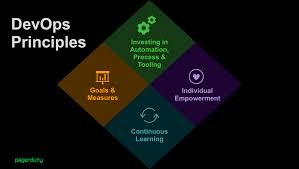
Understanding the principles of DevOps begins with recognizing that it is not merely a set of tools or a job title—it is a cultural and operational philosophy that reshapes how software is developed, delivered, and maintained. At its core, DevOps bridges the traditional divide between development and operations teams, fostering a collaborative environment where shared responsibility, continuous improvement, and rapid iteration are the norm. This shift is driven by the need for speed, reliability, and agility in a digital landscape where customer expectations and competitive pressures demand faster innovation cycles and more resilient systems.
One of the foundational principles of DevOps is collaboration. In traditional software development models, developers would build applications and then hand them off to operations teams for deployment and maintenance. This handoff often led to miscommunication, delays, and finger-pointing when issues arose. DevOps breaks down these silos by encouraging cross-functional teams that work together throughout the entire lifecycle of a product. Developers, operations engineers, quality assurance professionals, and even security experts share ownership of the process, from planning and coding to testing and deployment. This integrated approach leads to better alignment, faster problem-solving, and a more cohesive understanding of the system as a whole.
Automation is another key principle that underpins DevOps practices. Manual processes are not only time-consuming but also prone to human error. By automating tasks such as code integration, testing, deployment, and monitoring, teams can achieve greater consistency and efficiency. Automation enables continuous integration and continuous delivery, allowing code changes to be merged, tested, and released rapidly and reliably. For example, a team might use automated pipelines to ensure that every code commit triggers a series of tests and builds, culminating in a deployment to a staging environment. This reduces the risk of regressions and ensures that software is always in a deployable state.
Feedback loops are essential to the DevOps mindset. The goal is to learn quickly and iterate based on real-world data. Monitoring tools provide visibility into system performance, user behavior, and error rates, enabling teams to respond proactively to issues and optimize the user experience. This feedback is not limited to production environments—it also extends to development and testing phases. By incorporating feedback early and often, teams can make informed decisions, prioritize improvements, and avoid costly surprises. A retail company, for instance, might monitor customer interactions with its mobile app to identify bottlenecks or usability issues, then use that data to guide development priorities.
DevOps also emphasizes a culture of ownership and accountability. When teams share responsibility for outcomes, they are more invested in the success of the product. This means taking initiative to fix problems, improve processes, and support teammates. It also means embracing a blameless approach to failure. Mistakes are inevitable, especially in complex systems, but they should be treated as learning opportunities rather than sources of blame. Post-incident reviews, or retrospectives, help teams understand what went wrong, what can be improved, and how to prevent similar issues in the future. This fosters a culture of trust, resilience, and continuous learning.
Scalability and flexibility are natural outcomes of DevOps principles. As organizations grow and systems become more complex, the ability to adapt quickly becomes critical. DevOps practices support modular architectures, microservices, and cloud-native technologies that enable teams to scale efficiently and respond to changing demands. Infrastructure as code, for example, allows teams to manage and provision resources programmatically, reducing manual overhead and improving consistency. This flexibility is particularly valuable in dynamic environments where workloads fluctuate or where rapid experimentation is needed to stay competitive.
Security is increasingly being integrated into DevOps practices, leading to the emergence of DevSecOps. Rather than treating security as a separate phase or team, DevSecOps embeds security considerations throughout the development lifecycle. This includes automated security testing, code analysis, and compliance checks. By addressing vulnerabilities early and continuously, teams can reduce risk and ensure that security does not become a bottleneck. A financial services firm, for example, might use automated tools to scan for security flaws in its codebase as part of its CI/CD pipeline, ensuring that every release meets regulatory standards without slowing down delivery.
Ultimately, understanding the principles of DevOps means recognizing that it is a holistic approach to building and operating software. It is about creating environments where collaboration, automation, feedback, and accountability drive continuous improvement. It is about aligning technical practices with business goals, ensuring that software delivers value quickly, reliably, and securely. For organizations willing to embrace this mindset, DevOps offers a path to greater agility, innovation, and customer satisfaction. It transforms not just how software is built, but how teams work together, learn, and grow in an ever-changing digital world.