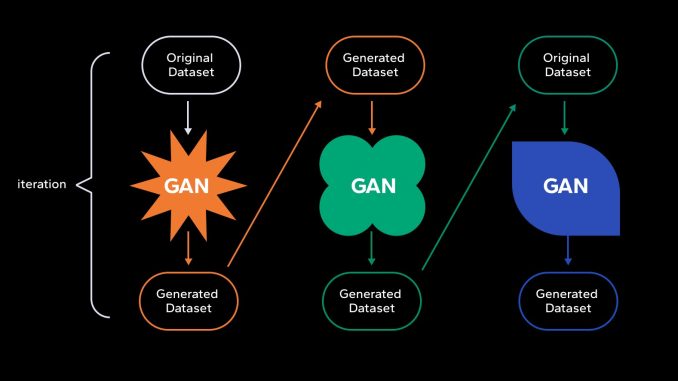
Generative Adversarial Networks, or GANs, have captured the imagination of researchers, businesses, and innovators alike since their introduction. They represent a breakthrough in artificial intelligence by enabling machines to generate data that closely resembles real-world inputs. Whether it is creating lifelike images, synthesizing voices, or designing new products, GANs have demonstrated remarkable capabilities. As the technology matures, the question is no longer whether GANs will play a role in the future but how they will shape industries and society in profound ways.
The essence of GANs lies in their unique architecture, where two neural networks—the generator and the discriminator—compete against each other. The generator attempts to create synthetic data, while the discriminator evaluates whether the data is real or fake. Through this adversarial process, both networks improve, resulting in outputs that become increasingly indistinguishable from authentic data. This dynamic has proven to be a powerful mechanism for innovation, pushing the boundaries of what machines can create.
Looking ahead, one of the most promising applications of GANs is in content creation. Businesses are already exploring how GANs can generate realistic images, videos, and even text to support marketing, entertainment, and design. The ability to produce high-quality content at scale has the potential to transform industries that rely heavily on creativity. For example, advertising agencies could use GANs to generate personalized campaigns tailored to individual preferences, while film studios might employ them to create visual effects more efficiently. The future points toward a world where GANs become integral tools for creative professionals, augmenting rather than replacing human imagination.
Healthcare is another domain where GANs are poised to make a significant impact. Medical imaging, drug discovery, and personalized treatment plans all stand to benefit from the technology. GANs can generate synthetic medical images that help train diagnostic systems without compromising patient privacy. They can also simulate molecular structures, accelerating the search for new drugs. By reducing reliance on scarce or sensitive data, GANs open doors to faster innovation and more accessible healthcare solutions. Their role in this sector underscores the broader potential of AI to improve lives in tangible ways.
The fashion and design industries are also embracing GANs as a way to explore new possibilities. Designers can use GANs to experiment with styles, patterns, and materials, creating prototypes that would otherwise take weeks to develop. Retailers can leverage GANs to offer customers personalized recommendations or even generate virtual try-on experiences. These applications highlight how GANs can bridge creativity and commerce, enabling businesses to deliver unique experiences while optimizing efficiency.
Despite their promise, GANs also raise important challenges. One of the most pressing concerns is the potential misuse of the technology. Deepfakes, which rely heavily on GANs, have already demonstrated how synthetic media can be used to spread misinformation or manipulate public perception. As GANs become more sophisticated, distinguishing between real and generated content will become increasingly difficult. Addressing this issue will require not only technical solutions, such as watermarking or detection algorithms, but also ethical frameworks and regulatory oversight to ensure responsible use.
Another challenge lies in the computational demands of GANs. Training these networks requires significant resources, which can limit accessibility for smaller organizations. As technology advances, efforts to make GANs more efficient and scalable will be critical. Innovations in hardware, cloud computing, and algorithm design are likely to reduce these barriers, making GANs more widely available across industries. The democratization of GANs will be a key factor in determining how broadly their benefits are realized.
The future of GANs also involves integration with other emerging technologies. Combining GANs with reinforcement learning, natural language processing, or advanced robotics could unlock entirely new capabilities. Imagine robots that can design and test prototypes autonomously, or AI systems that generate realistic simulations for training purposes. These synergies will expand the scope of GANs beyond content generation, positioning them as foundational tools in the broader AI ecosystem.
From a business perspective, GANs represent both opportunity and disruption. Companies that harness their potential can gain a competitive edge by innovating faster, reducing costs, and delivering more personalized experiences. At the same time, industries must prepare for the shifts that GANs will bring, from new business models to evolving customer expectations. Leaders will need to balance enthusiasm with caution, ensuring that adoption strategies align with ethical standards and long-term goals.
Education and workforce development will also play a crucial role in shaping the future of GANs. As the technology becomes more prevalent, professionals across fields will need to understand its capabilities and limitations. Training programs that emphasize both technical skills and ethical considerations will be essential. By cultivating a workforce that is prepared to engage with GANs responsibly, organizations can maximize benefits while mitigating risks.
Ultimately, the future of GANs is one of balance. Their potential to revolutionize industries is undeniable, but their risks must be managed carefully. The path forward will involve collaboration between technologists, policymakers, businesses, and society at large. By fostering innovation while prioritizing responsibility, GANs can become a cornerstone of the digital economy, driving progress in ways that are both creative and constructive.
As GANs continue to evolve, they will challenge our understanding of authenticity, creativity, and trust. They will blur the lines between what is real and what is generated, prompting new conversations about value and meaning in a digital world. Yet within these challenges lies opportunity—the chance to harness GANs not just for efficiency or novelty, but for meaningful impact. The future of GANs is not simply about technology; it is about how we choose to use it to shape the world we live in.