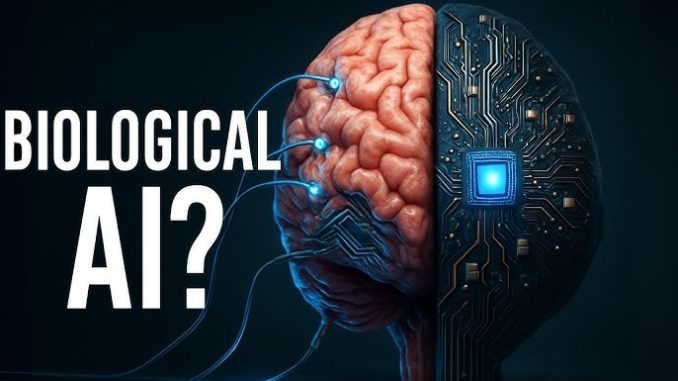
The evolution of computing has always been defined by breakthroughs in materials and design, from vacuum tubes to silicon chips. Yet as we approach the physical limits of traditional semiconductor technology, researchers are looking beyond the chip to a new frontier: bio-computing. This emerging field explores the use of biological systems, such as DNA, proteins, and even living cells, to perform computational tasks. While still in its early stages, bio-computing holds the potential to revolutionize how we process information, offering capabilities that conventional hardware cannot match.
At its core, bio-computing leverages the natural properties of biological molecules to store and manipulate data. DNA, for instance, is an incredibly dense medium, capable of storing vast amounts of information in a fraction of the space required by silicon-based systems. The ability to encode digital data into DNA sequences has already been demonstrated, with researchers successfully storing entire books, images, and even video files in strands of genetic material. This level of efficiency suggests that bio-computing could one day solve the growing challenge of data storage in an increasingly digital world.
Beyond storage, bio-computing introduces new paradigms for processing information. Biological systems are inherently parallel, meaning they can perform multiple operations simultaneously. Unlike traditional processors, which execute tasks sequentially, bio-computing systems can harness the complexity of molecular interactions to solve problems at scale. This parallelism makes bio-computing particularly promising for areas such as cryptography, optimization, and big data analysis, where traditional architectures struggle to keep pace with demand.
Another intriguing aspect of bio-computing is its potential for energy efficiency. Silicon chips consume significant amounts of power, and as data centers expand globally, energy usage has become a pressing concern. Biological systems, by contrast, operate at the molecular level with minimal energy requirements. Cells perform billions of operations every second using only the energy derived from chemical reactions. If harnessed effectively, bio-computing could provide a sustainable alternative to energy-intensive computing, aligning with broader goals of reducing carbon footprints in technology.
The implications of bio-computing extend far beyond traditional IT. In healthcare, bio-computing could enable personalized medicine by integrating computational processes directly into biological systems. Imagine diagnostic tools that use DNA-based circuits to detect diseases at the molecular level or therapies that adapt in real time to changes in a patient’s condition. By merging computation with biology, medicine could become more precise, responsive, and tailored to individual needs, transforming how we approach treatment and prevention.
In synthetic biology, bio-computing offers a way to design programmable organisms that perform specific tasks. Microbes could be engineered to act as living sensors, processing environmental data and responding accordingly. For industries such as agriculture or energy, this opens possibilities for sustainable solutions, from crops that adapt to changing climates to bioengineered systems that produce renewable fuels. The ability to embed computational logic into living systems could redefine how we interact with the natural world.
Of course, the journey toward bio-computing is not without challenges. Biological systems are inherently complex and unpredictable, making it difficult to design reliable computational frameworks. Unlike silicon chips, which operate in controlled environments, biological molecules are subject to variability and environmental influences. Ensuring accuracy, stability, and scalability in bio-computing systems will require significant advances in both biology and computer science. Yet these challenges also highlight the interdisciplinary nature of the field, bringing together expertise from diverse domains to push the boundaries of what is possible.
Ethical considerations also play a critical role in the future of bio-computing. As we begin to manipulate living systems for computational purposes, questions arise about safety, responsibility, and unintended consequences. The potential to create programmable organisms raises concerns about misuse or ecological impact. Establishing clear ethical frameworks and regulatory oversight will be essential to ensure that bio-computing develops responsibly, balancing innovation with societal values.
From a business perspective, bio-computing represents both opportunity and disruption. Companies that invest early in research and development may gain a competitive edge in industries ranging from pharmaceuticals to data management. At the same time, the shift from silicon to biology could challenge established players in the semiconductor industry, forcing them to rethink their strategies. The commercialization of bio-computing will likely follow a gradual path, beginning with niche applications before expanding into mainstream use, but its potential to reshape markets is undeniable.
The convergence of bio-computing with artificial intelligence adds another layer of possibility. AI thrives on large datasets and complex problem-solving, areas where bio-computing’s parallelism and efficiency could provide significant advantages. Integrating biological computation with machine learning could lead to systems that not only process information more effectively but also adapt in ways that mimic natural intelligence. This synergy could accelerate breakthroughs in fields ranging from drug discovery to climate modeling.
Looking ahead, the future of bio-computing will depend on continued collaboration between scientists, technologists, and policymakers. The field is still in its infancy, but the progress made so far suggests that the potential is vast. As research advances, we may see hybrid systems that combine silicon and biological components, leveraging the strengths of both to create powerful new architectures. Over time, bio-computing could evolve from a niche curiosity into a foundational technology that underpins the digital and biological worlds alike.
Ultimately, bio-computing represents a shift in how we think about computation itself. For decades, the chip has been the symbol of progress, driving innovation across industries. But as we move beyond the chip, we enter a realm where life itself becomes the medium of computation. This transformation challenges us to rethink the boundaries between technology and biology, opening doors to possibilities that once seemed like science fiction. The future of bio-computing is not just about faster or smaller machines—it is about redefining the very nature of computing in a world where biology and technology converge.